Map Brake System Components to verified applications, distributor-ready documentation, and service-bay ordering decisions.
The guide page uses the manifest sustainability slot as the friendly-advisor fitment experience. Its purpose is practical: show teams how to gather the right brake details before they ask for a quote, prepare a catalog note, or explain a recommendation to an installer.
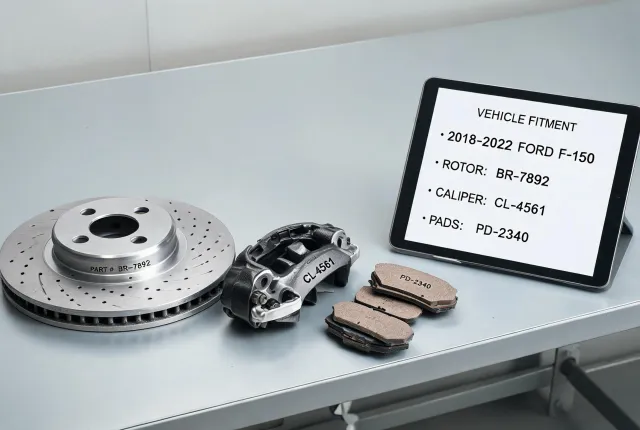
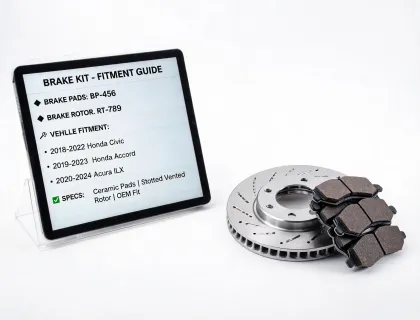
A brake lookup can appear simple until the buyer realizes that similar pads, rotors, or calipers may be separated by model year, trim, production date, rotor diameter, hardware inclusion, or regional specification. Akebono's guide encourages buyers to capture those details before the request is sent, because a support team can respond faster when it does not need to reconstruct the vehicle record from fragments.
For distributors, the payoff is fewer unclear quotes. For workshops, the payoff is less backtracking while a vehicle occupies a bay. For e-commerce catalog teams, the payoff is more disciplined listing language that invites shoppers to verify compatibility instead of assuming every search result is a match.
"The right brake answer is rarely just a part name; it is the part name plus the vehicle context, the installation setting, and the reason the buyer is replacing it."
The best support request includes the vehicle, current component clue, target brake family, and channel context. That information lets Akebono discuss fitment with the right level of detail for a distributor, workshop, dealer lane, fleet, or catalog team.